

The Meaning and History of Lapis Lazuli
Lapis lazuli is one of the oldest and most treasured gemstones in human history. Every piece carries a journey which began in the mountains of Badakhshan 6,500 years ago. These ancient mines are still producing lapis lazuli today - one of the oldest continuously worked mines in the world.
From Afghanistan, lapis travelled along early trade routes to Egypt, Mesopotamia, Greece, Rome, India, and eventually Europe, where it became a symbol of wealth and prestige.
The Egyptians believed the stone represented the heavens and associated it with truth, wisdom, and divine power.
Pharaohs and Queens wore lapis jewellery, amulets, and ceremonial ornaments. It adorned the famous funerary mask of Tutankhamun, and was treasured by Cleopatra, who is said to have ground lapis into a brilliant blue cosmetic for her eyelids.
The ancient Sumerians considered lapis lazuli a gift from the gods. It appears in royal tombs dating back over 4,500 years and was fashioned into seals, beads, statues, and jewellery for kings and nobles.
The Greeks and Romans believed lapis possessed healing and protective qualities. It was thought to encourage wisdom, strengthen friendships, and guard against misfortune.
During the Renaissance, lapis became even more valuable because artists discovered how to grind it into ultramarine, the richest and most brilliant blue pigment available.
Ultramarine was often more expensive than gold. Great masters such as Leonardo da Vinci, Michelangelo, and Johannes Vermeer used it sparingly, frequently reserving it for the robes of the Virgin Mary to signify purity and importance.
Today, lapis remains a symbol of elegance, wisdom, and individuality. It is valued for its deep celestial blue colour, natural flecks of golden pyrite, rich historical significance, and a timeless appeal that complements both contemporary and classic designs.
Today lapis lazuli sits alongside our other semi-precious stones in the Sarum Rocks gemstone collection — a small piece of that 6,500-year story, made to be worn every day.
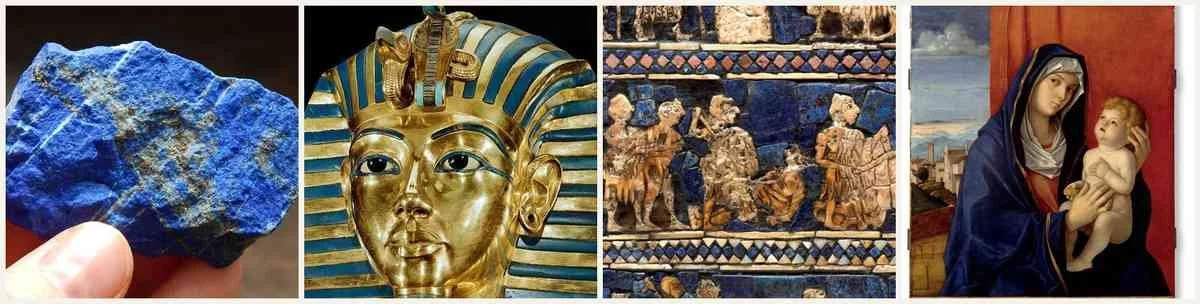
Lapis lazuli through history — raw stone from Afghanistan, Tutankhamun's burial mask, the Sumerian Standard of Ur, and Bellini's Madonna painted in ultramarine.
